House Washing in Jacksonville, FL
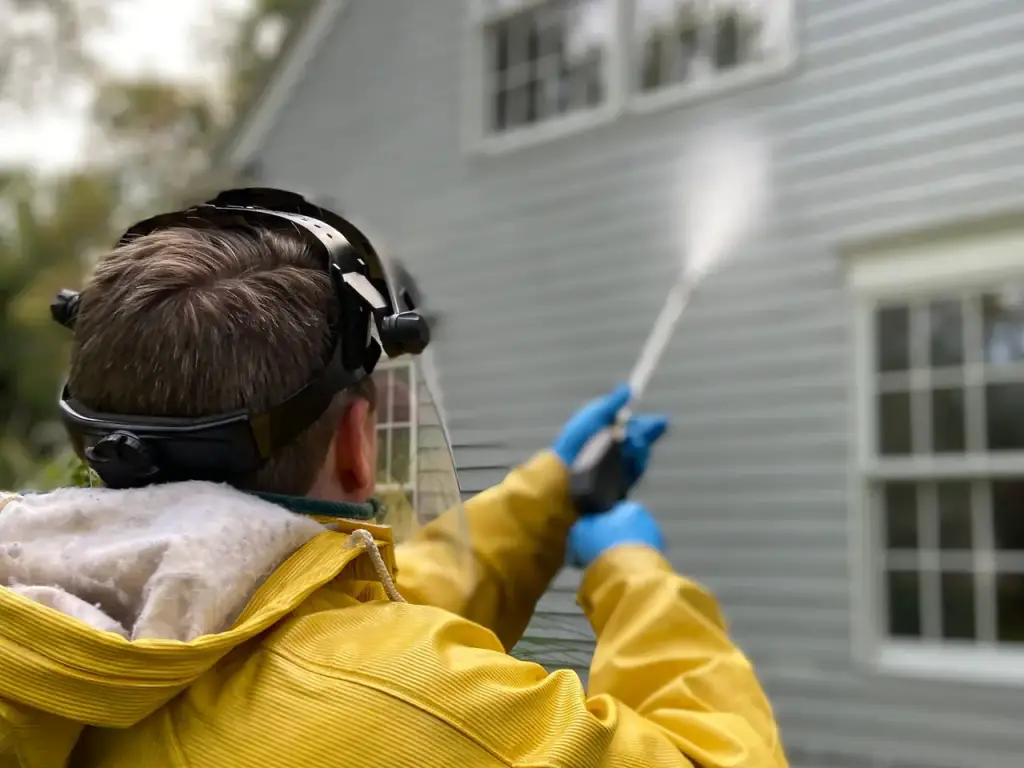
House washing is not pressure washing. The green and grey film on Jacksonville siding is organic growth, and it comes off with a cleaning solution at low pressure. High pressure can strip weak paint, damage stucco finishes and force water behind lap siding, which is why siding manufacturers limit it or rule it out. We wash siding, soffit, fascia and trim at low pressure, and we tell you what pressure we are using before we start.
Why siding should not be pressure washed
Siding is a rain screen, not a sealed surface. Lap siding overlaps to shed water running down it. Spraying upward under a lap pushes water the wrong way, behind the panels, which the Polymeric Exterior Products Association warns against. Georgia-Pacific notes that water collecting behind siding can stay there and cause decay, and CertainTeed does not recommend power washing its vinyl because of moisture intrusion. Water behind a panel is not visible from outside, so it is not something you can check when the job is finished.
High pressure can also strip paint that is already failing, damage acrylic stucco finishes (Sto limits routine cleaning to about 500 psi), wear away the surface of soft wood (USDA Forest Products Laboratory) and damage fibre cement (James Hardie).
The staining is biological, so force is not needed. A cleaning solution kills the growth and lifts it; the water only rinses. That approach is what the trade calls soft washing.
The full comparison is here, surface by surface, with the pressure ranges each material takes.
What the green and grey film is
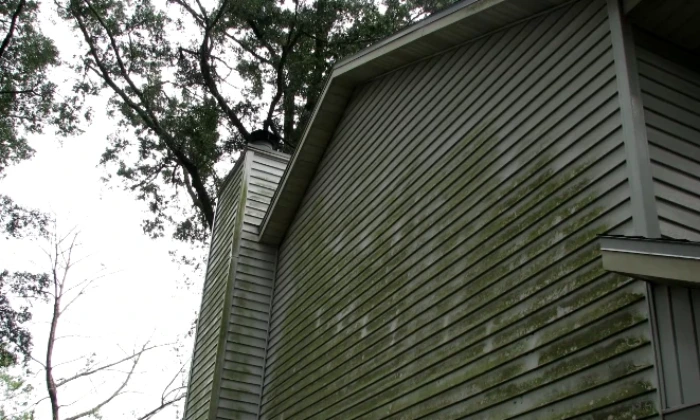
On siding it is algae and mildew growing on the surface, feeding on moisture and organic deposits. Jacksonville averages 53.4 inches of rain a year, and average morning humidity is 88 percent (NOAA NCEI, 1991 to 2020 normals).
It usually shows first where walls stay damp longest: shaded elevations, under deep eaves (CertainTeed notes mildew often starts there) and the lower courses where irrigation overspray lands. A wall in full sun can look clean while a shaded wall on the same house is green.
It is worth knowing that this is different from the black streaking on your roof. That is a specific organism, Gloeocapsa magma, and it needs its own treatment. See roof cleaning.
Your siding material, and what it needs
Vinyl siding
Manufacturers disagree on pressure. CertainTeed does not recommend power washing its vinyl. Georgia-Pacific allows 1,500 to 2,400 psi with a 40-degree tip, held at eye level and never aimed upward. Unless we know the product, we follow the stricter reading. Older vinyl can be chalky and faded, and cleaning can make that more obvious.
Stucco
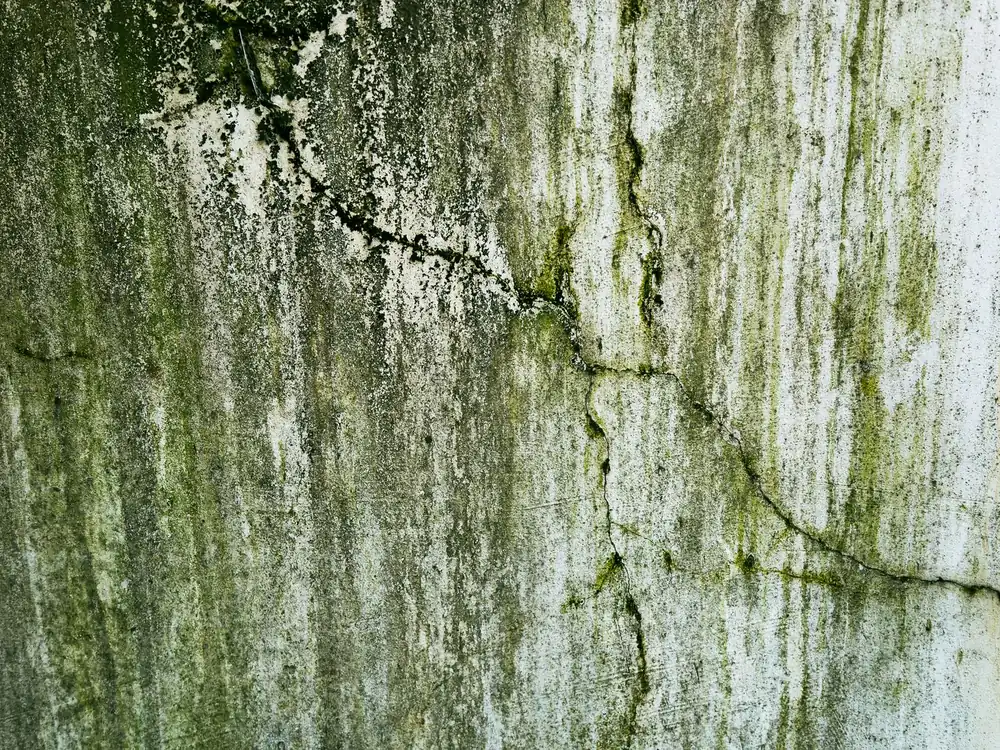
Common on Florida homes, and its texture holds growth, so it needs dwell time rather than pressure. Sto, a stucco manufacturer, limits routine cleaning of its acrylic finishes to about 200 to 500 psi with the nozzle held several feet away. Hard-coat stucco and EIFS are different systems, so we confirm which you have. Existing cracks get pointed out before we start, and water should not be forced into them.
Fibre cement, such as Hardie board
James Hardie says a pressure washer can damage its siding and recommends a garden hose and a soft brush. Its technical bulletin allows a pressure washer only with a wide fan tip, under 1,500 psi, at least 6 feet from the wall, and says damage from improper cleaning may not be covered by the warranty. We use low pressure and keep the spray off the joints.
Painted wood
The most condition-dependent of the group. Sound paint washes well. Chalking, flaking or failing paint is likely to come off, so if your paint is near the end of its life a wash may reveal it. The USDA Forest Products Laboratory also warns that power washing can remove wood from the surface of soft woods such as cedar.
Brick and masonry
Tolerates more than siding, but soft or deteriorated mortar is usually the weak point, so we check the joints before choosing a pressure.
Before and after
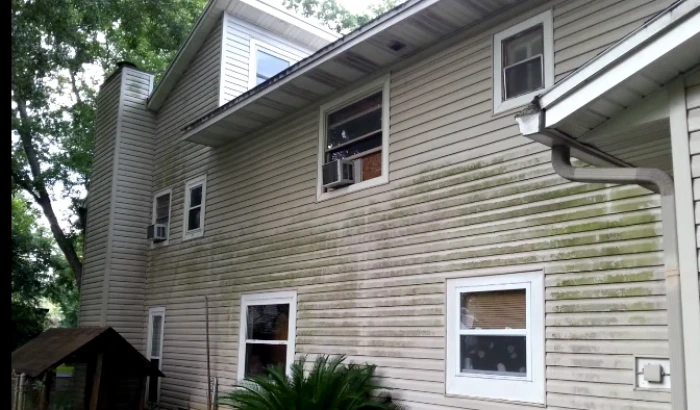
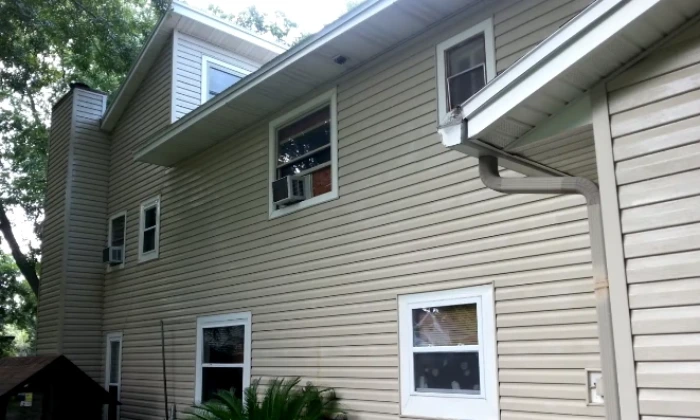
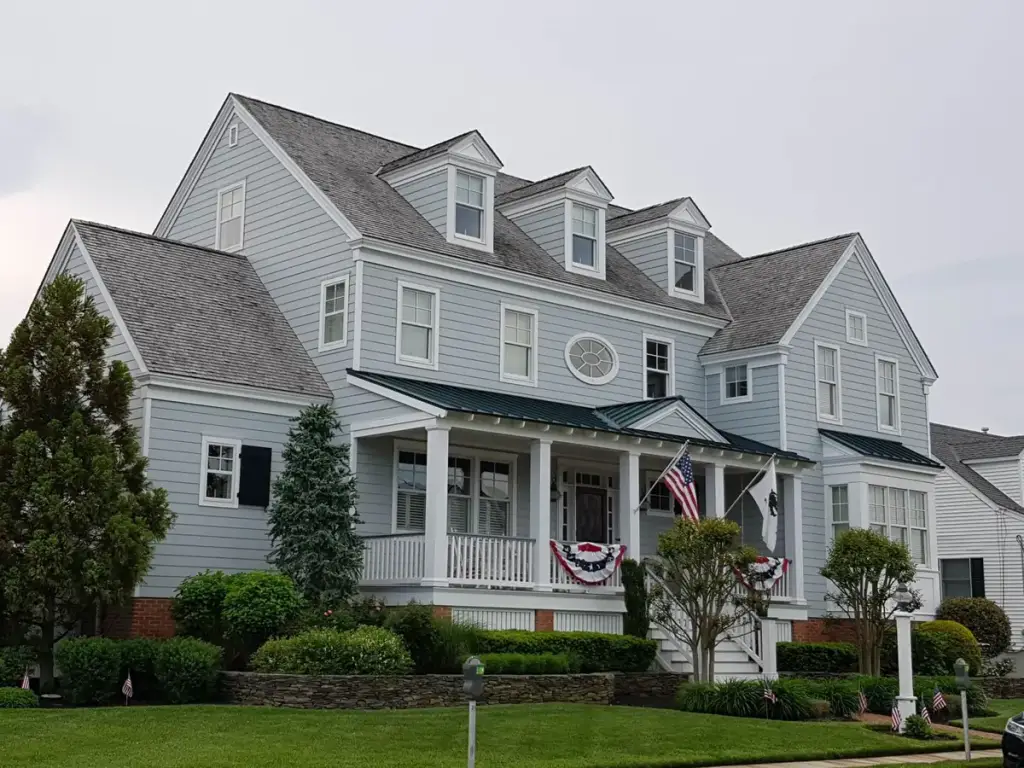
Example before and after photos of lap siding cleaning. They illustrate the method and are not photos of our Jacksonville work, which will replace them as it is photographed.
How a house wash runs
- We walk the elevations first. Material, paint condition, cracking, failed sealant, open vents, light fittings and anything that should not get wet.
- Planting and hard surfaces get wetted down. Beds below the wall are soaked before we start so anything reaching them is already diluted, and rinsed again after.
- Solution applied at low pressure, working bottom to top so it does not run over dry surface and streak, then given time to work.
- Rinsed top to bottom at low pressure, with the wand angled down rather than up under the laps.
- We walk it with you and are straight about anything that did not fully lift. Oxidised vinyl, chalked paint and long-standing staining on porous stucco do not always come all the way back.
If the roof and gutters also need doing, they go first, so run-off from above does not land on freshly cleaned siding. See gutter cleaning.
What moves the price on a house wash
- Size, and which size. Some companies price a house wash by the home’s floor area, others by the wall area actually washed. Ask which one a quote is based on.
- One storey or two. Two storey work needs more reach, more setup and more care about what is below.
- Material and its condition. Porous stucco and chalking paint both take longer and carry more caveats than sound vinyl.
- How far the growth has gone. A light film and a fully colonised shaded elevation are different jobs.
- Access and what sits against the wall. Mature planting, screen enclosures, decking, narrow side returns and slopes all slow it down.
- Water supply. Whether there is a usable outside tap and what flow it gives.
- Whether soffit, fascia, trim and shutters are included. They should be quoted explicitly, not assumed either way.
House washing questions
Will it damage my siding or paint?
Low pressure with a cleaning solution is the method siding needs, and it is what we use. The honest caveat is paint at the end of its life: if your paint is already chalking or flaking, washing will take some of it off, because it was not holding on. We check paint condition before starting and tell you what we expect, rather than discovering it together halfway up a wall.
What is the difference between house washing and pressure washing?
House washing is soft washing: a cleaning solution at low pressure, with dwell time doing the work. Pressure washing uses force and belongs on hard flatwork such as concrete. The words get used interchangeably across this industry, which is part of why people end up with a pressure washer pointed at their siding. Full comparison here.
How long will it stay clean?
It depends on the elevation rather than on a number. A shaded north wall under tree cover will show growth again well before a sun exposed wall on the same house. Irrigation overspray hitting the lower courses shortens it further. We would rather look at how your walls are actually behaving after a season than sell you a fixed interval.
What about my plants?
We cover or wet plants along the wall before we start and rinse them afterwards, which is what university extension services advise when bleach-based cleaners are used near plants (Iowa State University Extension). If there is a plant you are particularly attached to, point it out when we quote and we will plan around it.
Do you wash soffit, fascia and shutters too?
They can be, and they should be specified in the quote rather than assumed. Soffit in particular collects a lot in this climate and is usually worth including. Shutters sometimes come off better than they clean in place, and we will say which yours are.
Should I wash before painting?
Yes. Paint adheres poorly over mildew and dirt. If painting is the plan, say so when you book, because a wash for paint preparation is timed differently from a wash for appearance.
Get a house wash quote
Tell us the siding material if you know it, one storey or two, and which elevations are worst.